At an Armenian table, a piece of lavash can become a wrap filled with cheese and fresh herbs, something to share with a guest, or the first bite of a family meal. Thin and easy to fold, it has a place beside both simple food and a full celebration.
Making it is a shared skill, too. Around a traditional oven, bakers divide the work: rolling dough, stretching it, placing it against the hot wall, and lifting out the finished bread. Each person helps the next.
Lavash brings those two parts of Armenian life together—the care that goes into preparing food and the pleasure of sharing it.
What is lavash?
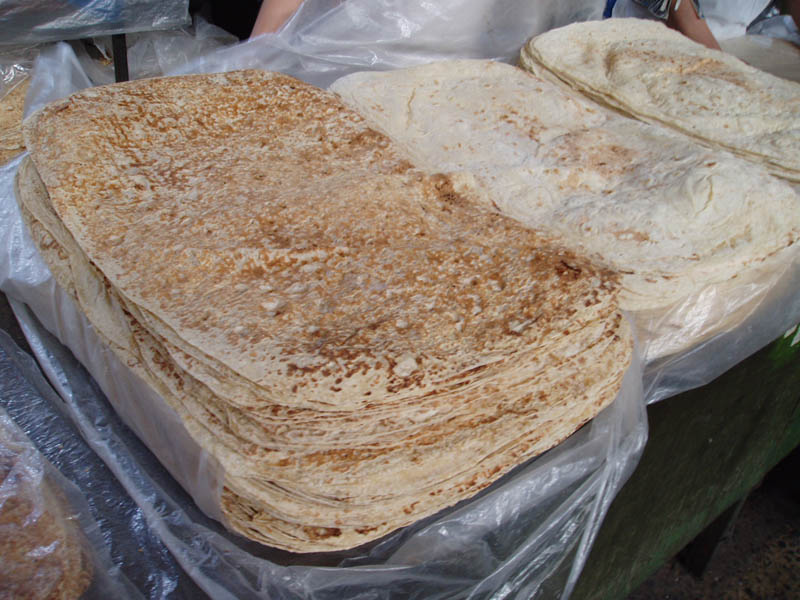
Lavash is a thin flatbread that is a familiar part of Armenian cooking. Freshly made, it is soft enough to fold or roll. The surface has the toasted spots and bubbles left by the heat of the oven.
The dough starts with simple ingredients, including flour and water. Some bakers use yeast or a piece of fermented dough. Families and villages have their own ways of preparing it, learned through years of practice.
That is part of its appeal. A short ingredient list becomes something full of character in the hands of an experienced baker.
How it is baked in a tonir
A tonir is a round clay oven, traditionally set into the ground. A fire heats its inner walls. Those walls become the baking surface.
The dough is divided into portions, rolled out, and stretched into a thin sheet. The baker lays it over a padded cushion, which helps carry the wide sheet without tearing it. With a practiced movement, the dough is pressed against the hot inside wall.
It sticks there as it bakes. The baker then lifts the finished lavash away, ready to make room for the next piece. Watching this happen gives you a real sense of the skill involved: handling something so thin while working close to intense heat.
Rolling, stretching, and baking each take practice. The finished bread shows how well those steps work together.
The teamwork behind every batch
Traditional lavash baking often brings women from a family or neighborhood together. One person prepares the next sheet while another works at the tonir. Sharing the jobs keeps the baking moving.
In its reporting from Yeghvard, the Smithsonian described neighbors taking different roles around the oven. Some rolled dough; others removed the bread. The visitors were welcomed with warm lavash, cheese, and herbs.
It is an easy scene to appreciate: people working together, food coming straight from the oven, and a portion offered to someone else. The welcome is part of the experience.
Lavash at the family table
One of the simplest ways to enjoy lavash is wrapped around cheese and fresh herbs. Tear off a piece, add the filling, and fold it into a handful. Green onions and cilantro are among the accompaniments documented at Armenian lavash gatherings.
It also becomes part of cooked dishes. In panrkhash, lavash is combined with cheese, onions, and hot water. The bread softens and becomes part of a warm, filling meal.
These everyday uses help explain why lavash stays close to family life. You can enjoy it as a quick bite or make it part of food prepared for everyone at the table.
Why lavash is placed on newlyweds’ shoulders
At Armenian weddings, lavash can be laid over the shoulders of the bride and groom. The custom expresses a wish for prosperity and children as they begin their married life.
Bread that feeds a household becomes a blessing for a new household. It is a warm, visible way for a family to wish the couple a happy future together.
UNESCO includes this wedding custom in its description of lavash’s place in Armenian culture. The celebration connects an everyday food with one of a family’s most important occasions.
A tradition worth passing on
In 2014, UNESCO added the preparation and cultural meaning of lavash in Armenia to its Representative List of the Intangible Cultural Heritage of Humanity. The recognition celebrates a living practice: the skills, teamwork, and customs that people teach one another.
For Armenian families, that connection can begin with something very ordinary—sharing bread at a meal. Learning how it is baked adds another layer of appreciation for the people who make it.
Whether it comes fresh from a tonir or from a neighborhood bakery, bringing lavash to the table is a simple way to enjoy Armenian food and share it with someone else.