Some Armenian rugs carry the name of the person who made them. Others record a date, a prayer, or a message. Look closely, and a rug can tell you more than its colors and patterns suggest.
For generations, Armenian weavers made rugs for their homes, as gifts, and for important family occasions. The work took skill and patience. Every row had to fit the design, and every color had to be placed by hand.
That is what makes an Armenian rug worth a closer look. Its colors, patterns, and tiny knots show the care someone put into making it. For a family who has kept one across generations, it can also be a treasured connection to the people who came before them.
A craft passed down through families
Rug weaving has a long history in Armenia and the surrounding region. The Smithsonian notes that textile finds from historical Armenian lands reach back thousands of years. These early finds help show the deep roots of textile making in the region.
Much of the work happened at home, with women teaching younger family members. A rug could become a wedding gift or something made to remember an occasion. Selling rugs also gave skilled weavers a way to earn money.
Within that long history, Armenian families developed and passed on their weaving skills. Learning the craft meant learning from another person: watching their hands, practicing the knots, and gradually making a whole design come together.
How a handmade rug is made
A loom holds the long threads that form the rug’s base. The weaver works across them, building the rug one row at a time.
In a knotted rug, pieces of yarn are tied around the base threads. Their cut ends create the soft surface, called the pile. Changing the yarn colors creates the design. Many Armenian rugs use a symmetrical double knot, which wraps around two threads.
A flat-woven carpet is made differently. Threads are woven together without that raised, knotted surface. Its smooth, thin surface shows another way weavers turn colored thread into a detailed design.
Wool must also be prepared before weaving starts. It is cleaned, turned into yarn, and dyed. The finished rug brings all of that work together. The pattern is built into the fabric as it grows.
What are the patterns?
Stars, crosses, flowers, and angular shapes appear in Armenian rugs. One well-known type is the dragon rug, called vishapagorg. Weavers give its dragons their own forms, using bold lines and shapes that become part of the larger pattern.
The variety is part of the beauty. Weavers in different places gave familiar designs their own touches, choosing colors and arranging shapes in new ways. Looking across several rugs, you can appreciate both the shared tradition and each maker’s choices.
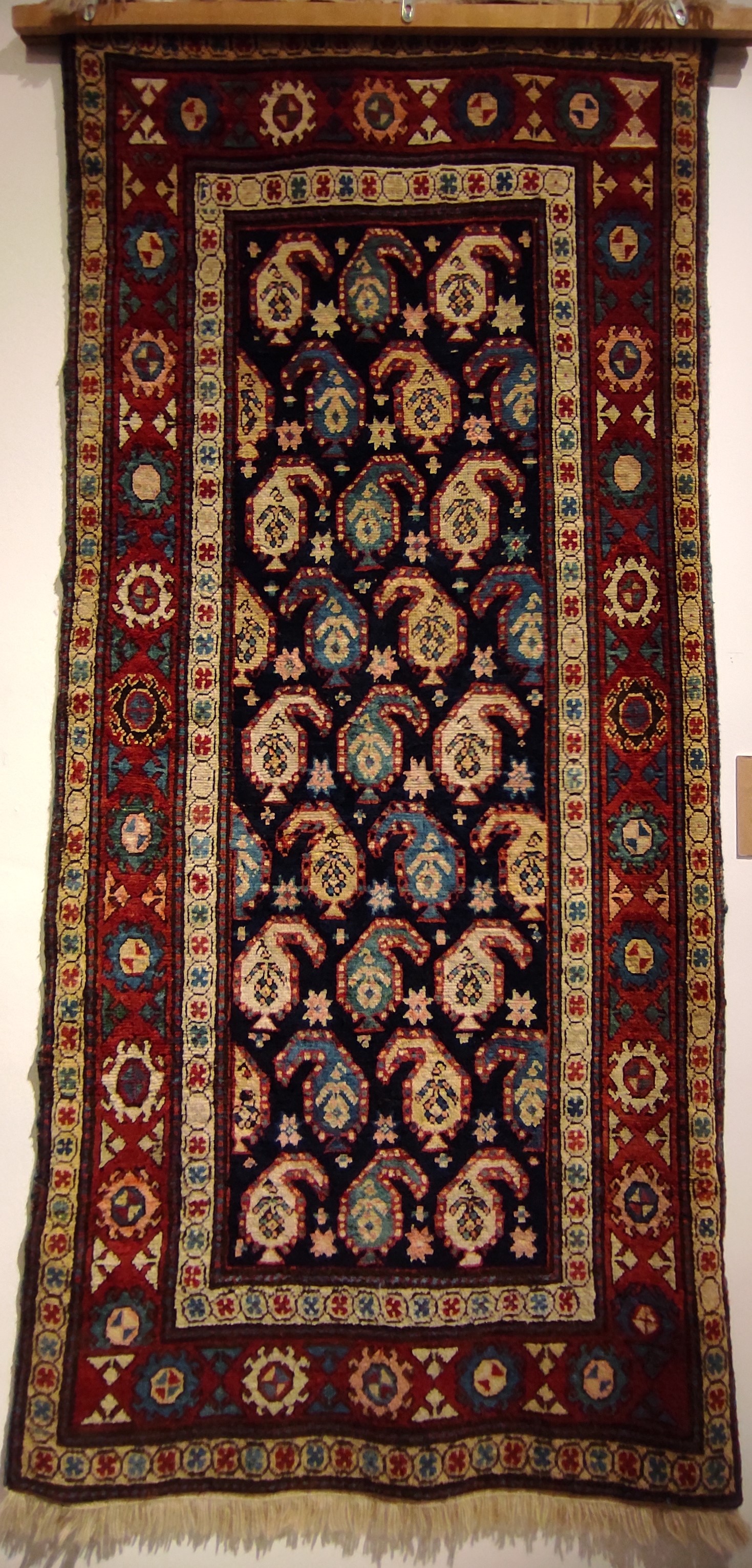
On the “Starfall” carpet pictured here, notice how the small shapes repeat across the middle and how the border frames them. Following those rows with your eyes makes it easier to appreciate the patience and planning behind the finished piece.
When a rug tells us who made it
Some weavers also worked Armenian letters into their designs. An inscription may preserve a name, a place, or a date. The Armenian Rugs Society keeps records of rugs and other woven objects with Armenian inscriptions to help researchers study them.
Seeing Armenian words woven into a rug adds a personal connection. Alongside the design, there may be someone’s name or a message they wanted others to read. The rug preserves their work and their words together.
The Armenian rug sent to the White House
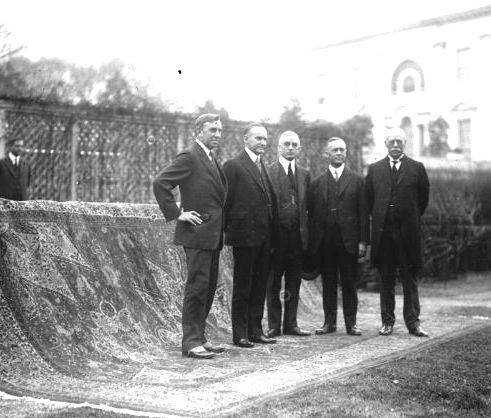
One famous example was made by Armenian children who survived the genocide. At an orphanage in Ghazir, Lebanon, girls learned to weave and made a large rug that was presented to President Calvin Coolidge in 1925.
The gift thanked Americans for helping survivors. Its many plants and animals were made from millions of hand-tied knots. The children used their new skills to create a gift of remarkable care and beauty. Their work remains a moving example of Armenian craftsmanship and gratitude.
Read the story of the Armenian orphans and their White House rug →
A living skill
Hand weaving continues through workshops and teaching programs. The Smithsonian’s My Armenia program has documented artisans helping people learn these skills, including Hasmik Margaryan and the Telik Handmade group in Tavush.
Each new weaver adds to that tradition. A skill learned at a loom can become work to take pride in, a way to support a household, and something to teach another person. Armenian rug making continues through those everyday acts of learning and creating.
The rug in your own family
A family rug is a wonderful starting point for a conversation. Who owned it? Was it brought from another country, bought from a dealer, or made by a relative? Keep any old photographs, receipts, or written notes with that information.
Take clear pictures of the whole rug, its back, and any writing. If you want it identified, those details give a textile specialist something useful to examine. A specialist can bring those details together with the weaving techniques and design to help you learn more about its background.
The memories your family shares become part of the rug’s story. Keeping them with it gives the next generation more to appreciate: the craft, the people, and the connection to their Armenian heritage.