Christianity has more than two billion followers today. But there was a time when being Christian could get you imprisoned or killed.
In the early 300s, Christians faced persecution in the Roman Empire. Nearby Armenia took a different path. It became the first country widely recognized as adopting Christianity as its state religion, traditionally dated to AD 301.
This change centered on King Tiridates III and Gregory the Illuminator, a Christian the king had once imprisoned. Their story helps explain how a persecuted faith became a lasting part of Armenian life.
Before Armenia became Christian
Armenia already had centuries of history, its own religious traditions, and temples where people worshipped several gods and goddesses. These included Anahit, associated with motherhood and fertility, and Vahagn, associated with strength and warfare.
Christianity reached Armenia through connections with neighboring regions. Christian communities existed before the king’s conversion, but the faith did not yet have royal support. That changed when Tiridates accepted Christianity and began helping Gregory spread it. [1]
Gregory and the king
The Armenian Church’s traditional account begins with a conflict between two families. Gregory’s father, Anak, had killed the Armenian king—the father of Tiridates. Both sons survived the violence that followed and grew up outside Armenia.
Tiridates eventually returned to rule the kingdom. Gregory, who had been raised Christian, entered his service. When Gregory refused to worship the king’s gods, Tiridates had him punished. Learning that Gregory was the son of his father’s killer made the conflict worse.
According to the Church’s account, Gregory was thrown into a deep prison pit and remained there for 13 years. A woman secretly brought him food, helping him survive. The monastery of Khor Virap, whose name means “deep pit,” stands at the place associated with his imprisonment. [2]
During this period, Tiridates continued persecuting Christians. The Church remembers Hripsime, Gayane, and their companions among those killed on his orders.
The account says the king later became severely ill. His sister believed Gregory could help him, so Gregory was brought out of the pit. Through prayer, he healed the king. Tiridates then accepted Christianity and supported the man he had imprisoned.
The healing and visions are part of Armenian Church tradition. They are the religious account of the conversion, rather than details historians can independently confirm. [3]
Christianity becomes the kingdom’s religion
With the king’s support, Gregory helped establish churches and organize Christian worship across Armenia. He became the first head of the Armenian Church.
Making Christianity the state religion meant it now had the backing of the ruler and his government. It did not mean every person immediately became Christian. Older beliefs continued, some temples were destroyed or replaced, and the change faced resistance.
The Armenian Church celebrates AD 301 as the year of adoption. Some historians place it later, around AD 314. The exact date remains debated, but Armenia is widely recognized as the first country to take this step. [1]
What remained
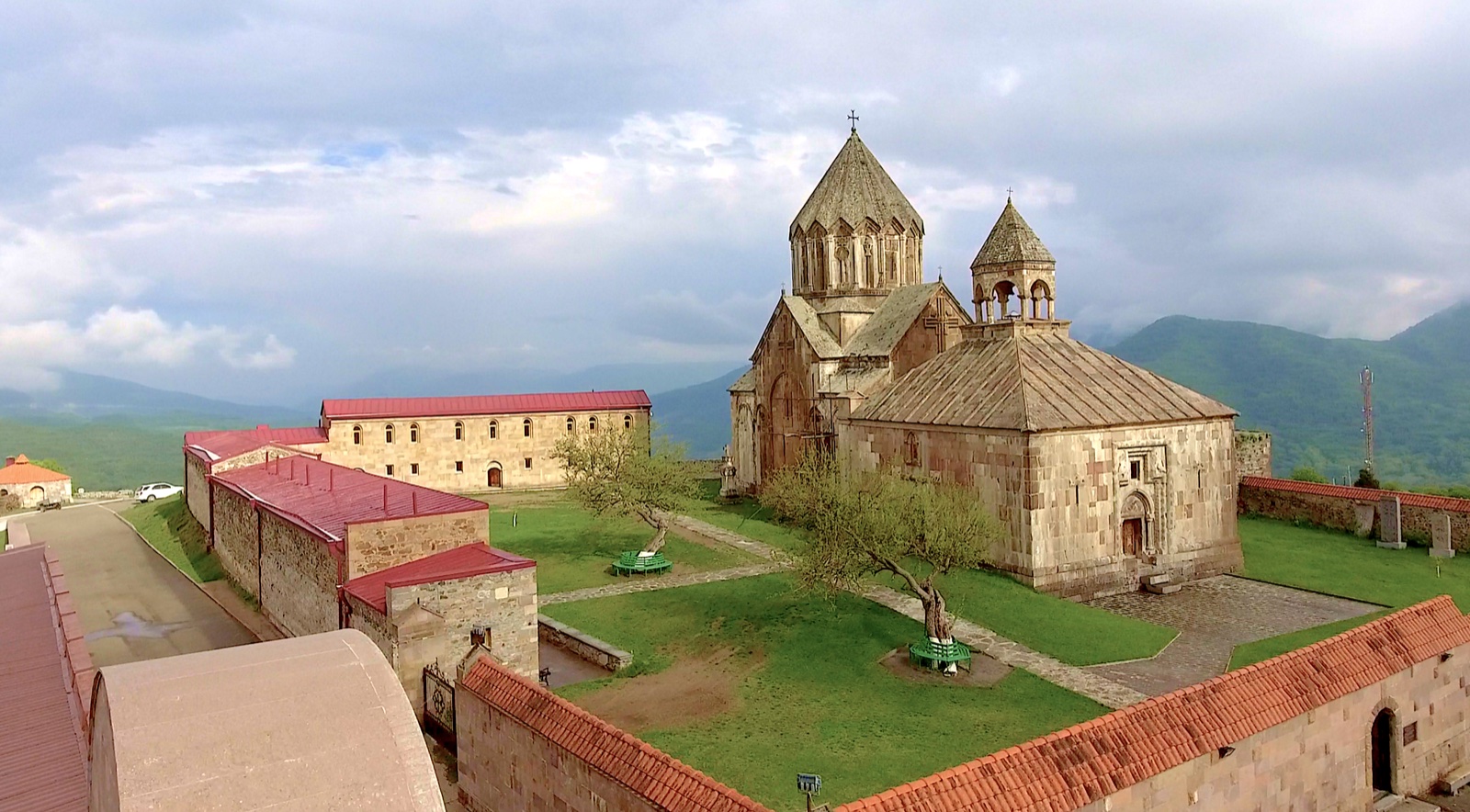
Over time, Christianity shaped Armenian worship, art, and architecture. Churches became lasting features of towns and villages, and places connected with the conversion became important destinations for believers.
One of the most important is Etchmiadzin, in the city of Vagharshapat. Its cathedral dates to the early fourth century, though it has been rebuilt and changed over the centuries. It remains the spiritual center of the Armenian Apostolic Church.
Nearby churches carry the names of Saint Hripsime and Saint Gayane. Together with the cathedral and the ruins of Zvartnots, they form a UNESCO World Heritage Site recognized for its importance to Armenian Christianity and church architecture. [4]
These places connect the early history of Christianity in Armenia with a faith people still practice today. Gregory’s imprisonment is remembered at Khor Virap. Hripsime and Gayane are remembered in churches bearing their names. At Etchmiadzin, the Church established in those early centuries continues its work.
Armenia’s history began long before Christianity. The decision to adopt it became one of the events that shaped the country’s culture for generations.