In 1919, audiences watched a young Armenian woman play herself in a film about the genocide she had survived.
Her name was Aurora Mardiganian. Just a few years earlier, she had been a teenager in the Ottoman Empire. Now she was in Hollywood, helping recreate events that had destroyed her family and forced her from her home.
The film brought her experiences to people thousands of miles away. But telling the world meant returning to memories she had only recently escaped.
Her life before 1915
Aurora was born in 1901 in Çemişgezek, a town in the Ottoman Empire, in what is now Turkey. Her Armenian name was Arshaluys. She grew up in a large family with eight children.
Before the genocide, she went to school and played the violin. One of her sisters was engaged, and a brother had already moved to America. These details matter because her childhood was more than the violence that followed. She had a home, a family, and things she was learning to do.
Surviving the Armenian Genocide
Aurora was 14 when the Armenian Genocide began in 1915. Ottoman authorities forced Armenians from their homes, sent them on deportation marches, and carried out mass killings.
Her father and a brother were killed. Aurora was forced from home with other members of her family. She endured captivity, slavery, and abuse before finally escaping.
In 1917, she reached Erzurum, then held by Russian forces. American missionaries helped her there. Her journey continued through the Caucasus, where relief workers helped arrange her passage to the United States.
Reaching America at sixteen
By 1917, Aurora had reached America. She was sixteen, far from the town where she had grown up, and trying to find a brother who had emigrated before the genocide.
Her search brought her into contact with the press. Newspapers became interested in what she had survived. Soon, the girl looking for a family member was being asked to explain the destruction of her family and community to strangers.
She had escaped immediate danger, but her experiences were about to become public. Within two years of arriving, her story would reach readers and cinema audiences across America.
How her story became a film
Aurora’s account appeared in the 1918 book Ravished Armenia, prepared with the help of writer H. L. Gates, also known as Harvey Gates.
The book gave English-speaking readers a survivor’s account while the events were still recent. It described what had happened to her and to other Armenians forced from their homes. Readers did not have to wait for a later history book to hear from someone who had been there.
The following year, a film based on her experiences reached audiences under the titles Ravished Armenia and Auction of Souls. Aurora played herself.
Filming took place in Los Angeles in late 1918. American locations stood in for places she had known in the Ottoman Empire.
For audiences, these were scenes on a screen. For Aurora, they were recreations of events she had lived through. She was being asked to perform her own suffering while still a young survivor.
The production was also a fundraising effort. Screenings raised money for relief organizations helping people affected by the violence. Some early charity screenings charged $10 a seat.
This was a silent film. Audiences could see Aurora on screen, but they could not hear her speaking as viewers can in a documentary today. Written title cards helped tell the story between scenes.
The cost of telling her story
Aurora’s work did not end when filming stopped. She also appeared at screenings to promote the film. That meant facing audiences and returning to the same painful events again.
The strain became too much. When she stopped making promotional appearances, look-alikes were hired to continue the tour. The campaign could carry on without her, even though her name and experiences were the reason people were coming.
Aurora’s public role brought attention to the Armenian Genocide, but it did not give her control over everything done in her name.
She later questioned where the money raised through screenings was going. She also took legal action against Gates, who had helped prepare her book, but received little money.
Her experience raises a difficult question: when a survivor’s story becomes a public campaign, who looks after the survivor?
The film helped people learn about Armenian suffering. Aurora herself still had to live with what had happened—and with the demands of sharing it publicly.
Life after the film
Aurora did not go on to a long Hollywood career. She later married and had a son. She lived in the United States for the rest of her life, but the fear left by the genocide did not simply disappear because she was safe in another country.
The Near East Relief Historical Society describes her continued fear that Turkish soldiers would find her in America. Her story had helped a public relief campaign, yet she was still living with the effects of what she had survived.
Her voice was recorded decades later
In 1984, Aurora gave a recorded interview for the Zoryan Institute’s Armenian Genocide Oral History Program.
That recording preserved something the Hollywood film could not: Aurora speaking about her life in her own voice, decades after the events.
Her testimony later helped inspire Aurora’s Sunrise, directed by Inna Sahakyan. The documentary combines animation, Aurora’s recorded interview, and surviving scenes from the 1919 film.
Viewers can hear her speak as well as see how filmmakers have represented her experiences. The animation fills in scenes for which there is no camera record; the interview lets audiences hear the woman whose life those scenes describe.
Aurora died in 1994. The interview had been recorded ten years earlier. Without it, later filmmakers would have had far less of her own voice to work with.
What survives today
The complete 1919 film is no longer known to exist. Only a short portion survives. That makes each remaining scene valuable, but it also means we cannot watch the full film as its first audiences did.
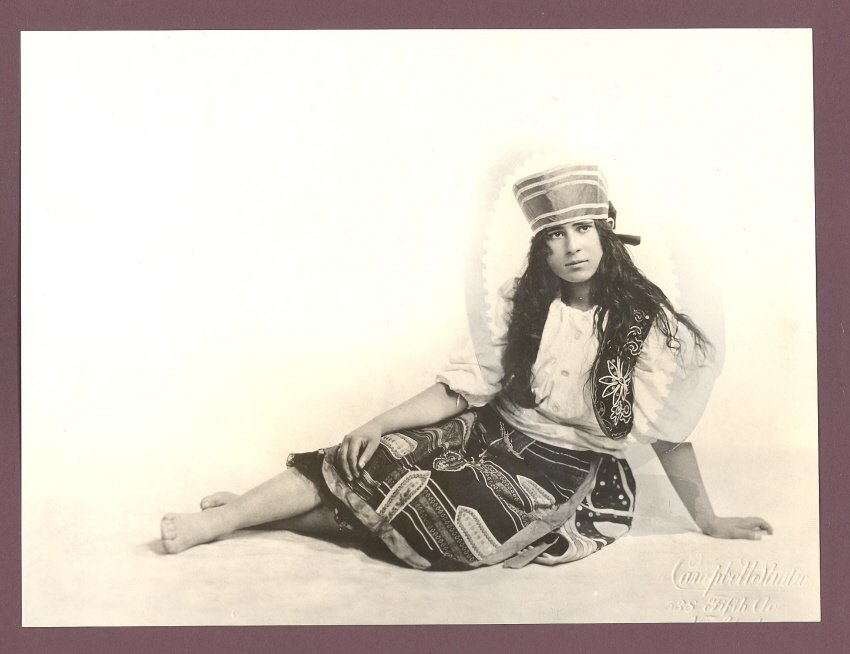
Her book, photographs, film footage, and recorded testimony preserve different parts of her life. A photograph shows her face. The book records the account shared with readers soon after her escape. The later interview shows how she described her experiences decades afterward.
Why her story still matters
Aurora’s life helps explain why preserving survivor testimony matters. A film can reach a large audience, but a recorded interview also lets future generations hear the person behind the story.
Her experiences were first shared when the Armenian Genocide was still recent. More than a century later, her voice and the surviving footage continue to help people understand what happened.