You probably know their inventions. You might not know they were Armenian.
Their work is used in homes, hospitals, and workplaces around the world, but many people have never heard their names—or known anything about their Armenian roots.
Some tackled problems that had challenged people for years. Others noticed something that could work better and found a way to improve it. Their ideas became useful enough that people stopped thinking about who came up with them.
Here are ten of those inventors, what they helped create, and why their work matters.
In this article
- Gabriel Kazanjian: An early handheld hair dryer
- Alex Manoogian: A better kitchen faucet
- Raymond Damadian: Helping build the MRI scanner
- Luther George Simjian: Early banking machines
- Avedis Zildjian: A new way to make cymbals
- Cyrill Demian: An early accordion
- Arthur Bulbulian: Oxygen masks for pilots
- Michel Ter-Pogossian: Helping develop PET scans
- Stephen Stepanian: Improving concrete mixer trucks
- Boris Babayan: Designing powerful computers
1. Gabriel Kazanjian: An early handheld hair dryer
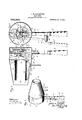
In 1911, Gabriel Kazanjian received a U.S. patent for a device that used heated air to dry hair.
His design combined an electric heater with a hand-operated fan. The user squeezed a lever to move air through the device, then pointed it where they wanted the warm air to go.
It looked different from the hair dryers we use today, but the basic idea was familiar: make a device small enough to hold and use it to dry hair faster.
The heater could also be removed so the device would blow cool air. More than a century ago, Kazanjian was already thinking about giving people a choice between heated and unheated airflow.
2. Alex Manoogian: A better kitchen faucet
A faucet with one handle lets you control both the temperature and the amount of water with a single movement.
Alex Manoogian helped make that design a successful household product. He improved an existing mechanism and helped bring the single-handle Delta faucet to market in the 1950s.
The challenge was making it reliable and practical to manufacture. An idea might work in a workshop, but a kitchen faucet needs to work day after day.
Manoogian’s contribution shows that invention often includes improving something until people can depend on it. His work helped turn a useful idea into a familiar part of the kitchen.
3. Raymond Damadian: Helping build the MRI scanner
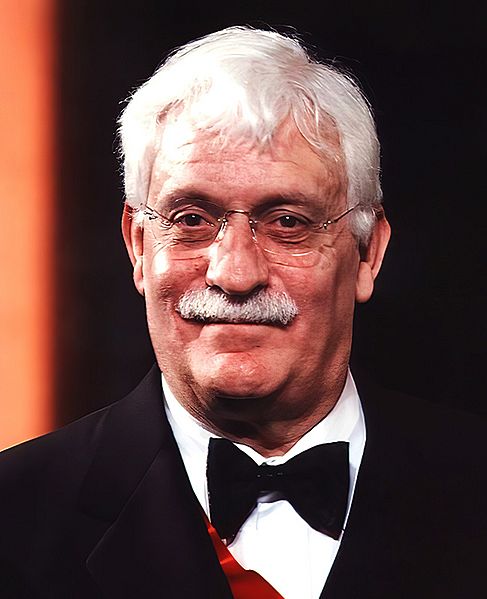
An MRI scanner uses a strong magnet and radio waves to make pictures of the inside of the body.
Raymond Damadian was one of the pioneers who helped make this possible. His research showed that different kinds of tissue could produce different magnetic signals. He worked with a team to build a scanner large enough for a person.
In 1977, their machine, called Indomitable, produced a scan of a human chest.
MRI developed through the work of several scientists, including Paul Lauterbur and Peter Mansfield. Damadian’s research and scanner were an important part of that history.
Together, these advances gave doctors a way to examine the body without surgery.
4. Luther George Simjian: Early banking machines
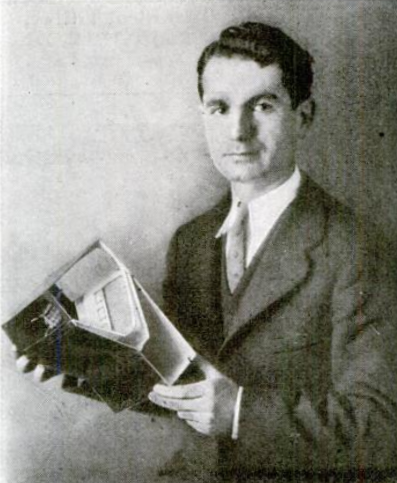
Long before banking apps, Luther George Simjian was working on ways for people to use a bank without standing in front of a teller.
His Bankmatic machine accepted deposits and made a photographic record of what customers put inside. That record helped show that the machine had received their money.
It worked differently from today’s cash-dispensing ATMs, but it explored an idea we now take for granted: a machine could handle part of a banking visit.
Simjian also developed photography equipment and a flight-training device. Across these different projects, he looked for ways machines could help people complete tasks for themselves.
5. Avedis Zildjian: A new way to make cymbals
Cymbals existed long before Avedis Zildjian. His contribution was a special way of making them.
Working in Constantinople, now Istanbul, in the early 1600s, he developed a metal mixture and process that produced strong, musical cymbals. His business began in 1623, and the family passed its methods down through generations.
Making a cymbal involves more than shaping a round piece of metal. The material and the way it is worked affect the sound it produces.
The Zildjian name is still printed on cymbals today. If you have watched a drummer perform, you may already have seen it without knowing the Armenian history behind the name.
6. Cyrill Demian: An early accordion
In 1829, Cyrill Demian and his sons patented an instrument in Vienna called the accordion.
Its buttons could produce chords—several notes played together. The player pushed and pulled the folded middle section to move air through the instrument and make sound.
It was small enough to carry, making it useful for people who wanted to take music with them.
Later makers expanded and changed the design. Demian’s instrument was an early version of the accordion people recognize today, with its buttons or keyboard and its stretching, folding body.
His work helped establish an instrument that would become part of musical traditions far beyond Vienna.
7. Arthur Bulbulian: Oxygen masks for pilots
High above the ground, pilots need extra oxygen to breathe safely.
Arthur Bulbulian helped design masks that supplied it. At Mayo Clinic, he worked with Walter Boothby and W. Randolph Lovelace II on the BLB oxygen mask. He later developed the A-14 mask for military use.
A mask had to do more than deliver oxygen. It needed to fit the face, work in freezing conditions, and allow pilots to communicate.
Bulbulian’s design resisted frost and included a microphone. That meant pilots could breathe and speak over the radio while wearing it.
His work helped aircrews carry out their jobs during World War II.
8. Michel Ter-Pogossian: Helping develop PET scans
Doctors sometimes need to know how an organ is working, as well as what it looks like.
Michel Ter-Pogossian helped develop PET scanning to give them that information. During the 1970s, he led a team at Washington University that helped design and build early PET scanners.
The scan follows a small amount of a radioactive tracer inside the body. By tracking where it goes, the scanner helps show activity in organs and tissues.
This gave researchers and doctors another way to study what was happening inside a living person.
Ter-Pogossian’s work helped make medical imaging more useful by showing how parts of the body function.
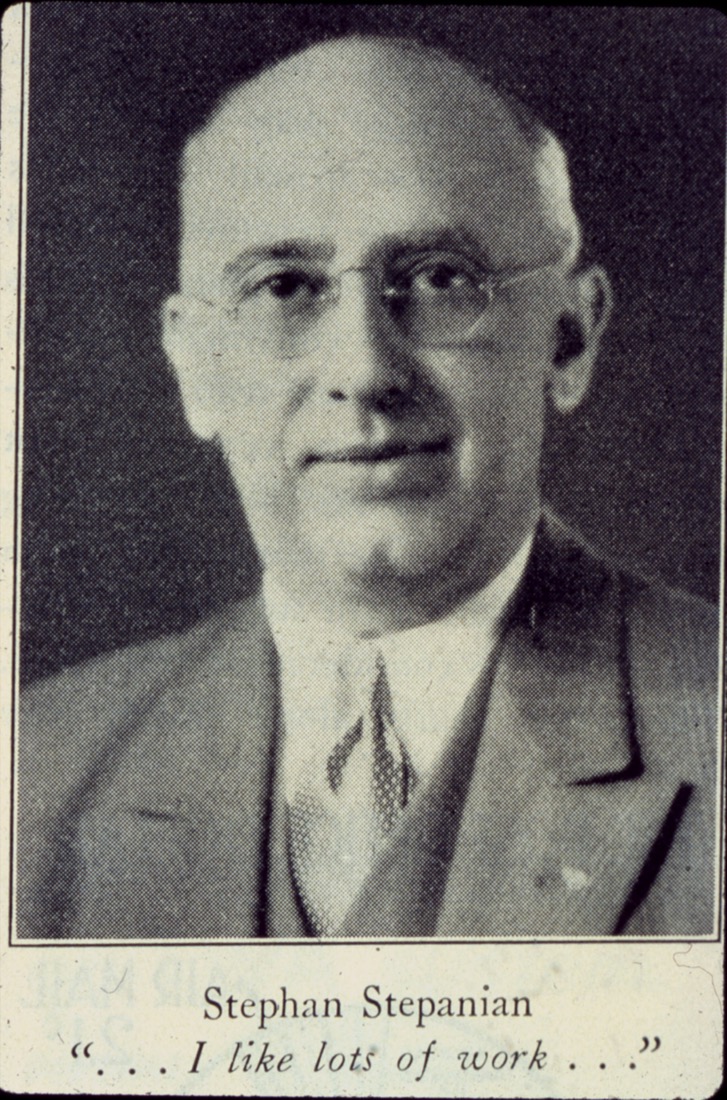
9. Stephen Stepanian: Improving concrete mixer trucks
Concrete is heavy, and getting it to a building site takes planning. It needs to arrive ready to use.
Stephen Stepanian helped develop equipment that combined mixing and transportation. His work included a truck-mounted mixing and delivery system, with a U.S. patent granted in 1933.
The patent described improvements to how the truck powered its equipment and moved concrete to the place it was needed.
These were practical changes to a difficult job. Workers had to mix the material, transport it, and get it into position before it hardened.
Stepanian’s work helped improve that process, connecting his name to a vehicle people still recognize on roads and building sites.
10. Boris Babayan: Designing powerful computers
Boris Babayan helped design the Elbrus family of computers in the Soviet Union.
These machines were built to handle demanding calculations. Making them faster required careful planning of how their parts and software worked together.
A computer can have powerful components and still waste time if they do not work together efficiently. Babayan worked on the design decisions that helped the machine carry out its tasks.
He was part of a larger engineering effort. His contribution was helping find better ways to organize and process the work inside a computer.
His career adds computing to the many fields where Armenian inventors and engineers have made lasting contributions.